
In the world of surgical sutures, precision and safety are paramount. The ASTM F3014 standard plays a crucial role in ensuring that suture needles can penetrate tissue efficiently without causing unnecessary trauma.
What is ASTM F3014?
ASTM F3014 is a standard test method developed by ASTM International for measuring the penetration force of surgical suture needles. It provides a controlled, repeatable way to assess how much force is required for a needle to pierce a standardized medium, simulating human or animal tissue.
This test ensures that needles perform reliably in clinical use by:
Verifying needle sharpness
Preventing excessive tissue trauma
Supporting consistent quality across batches
Why is Needle Penetration Testing Important?
Penetration force directly affects a surgeon’s control, patient comfort, and healing outcomes. Key reasons for conducting penetration tests include:
Ensuring needle sharpness and performance
Maintaining product safety and reliability
Complying with medical device regulations and quality standards
Preventing product recalls or surgical complications
Test Equipment and Materials Required:
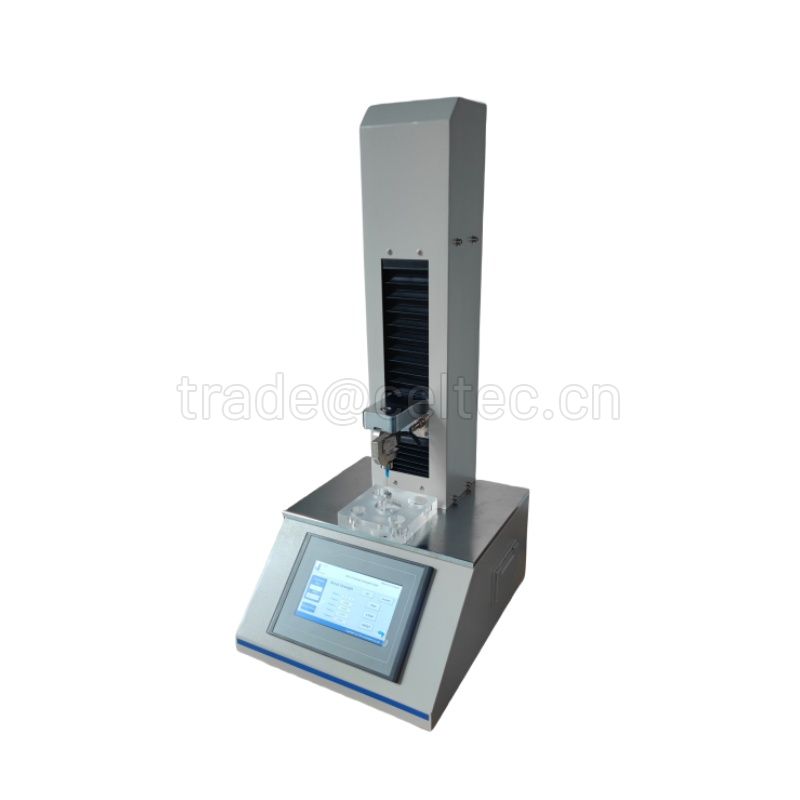
To perform penetration testing according to ASTM F3014, you’ll need:
Universal Testing Machine (UTM) with appropriate load cells
Penetration test fixture for holding needles and test medium
Synthetic tissue simulant (like polyurethane film or specific elastomers)
Data acquisition software to record force vs. displacement
How to Perform the ASTM F3014 Test (Step-by-Step)
Step 1: Prepare the Needle Specimens
Select and inspect the surgical suture needles to be tested, ensuring they are free from visible defects.
Step 2: Set Up the Test Fixture
Mount the synthetic tissue simulant securely in the penetration test fixture, ensuring uniform thickness and tension.
Step 3: Calibrate the Testing Machine
Calibrate the Universal Testing Machine (UTM) with the appropriate load cell range based on expected penetration forces.
Step 4: Configure Test Parameters
Input test settings including:
Penetration speed (typically 50–500 mm/min)
Maximum travel distance
Sampling rate for data acquisition
Step 5: Conduct the Test
Position the needle vertically, aligned with the test medium. Start the machine to drive the needle through the simulant while continuously recording the force required.
Step 6: Record and Analyze Results
Key data collected:
Initial penetration force (N or gf)
Peak penetration force
Force vs. displacement curve
Results can be compared against manufacturer specifications or regulatory limits.
Reporting the Results:
Typical penetration test reports include:
Test date and operator
Needle type and size
Penetration medium details
Parametry testu (prędkość, odległość itp.)
Dane dotyczące siły penetracji (początkowej i szczytowej)
Wykres siła-przemieszczenie
ASTM F3014 Metoda testowa Zastosowania:
Ta metoda testowa jest używana przez
Producenci urządzeń medycznych
Laboratoria kontroli jakości
Organy regulacyjne
Zespoły badawczo-rozwojowe ds. szwów chirurgicznych
Ma to kluczowe znaczenie dla weryfikacji jakości produktu i zapewnienia zgodności z normami FDA i ISO 13485 dotyczącymi urządzeń medycznych.
Przemyślenia końcowe:
AMetoda testowa STM F3014 jest niezbędna do oceny skuteczności penetracji igieł do szwów chirurgicznych. Zapewniając spójne, znormalizowane podejście do pomiaru ostrości igły i siły penetracji, metoda ta pomaga zapewnić bezpieczeństwo pacjentów, jakość produktu i zgodność z przepisami.
Dla producentów urządzeń medycznych i laboratoriów testowych opanowanie tej procedury jest kluczem do dostarczania niezawodnych, wysokiej jakości produktów chirurgicznych.
Często zadawane pytania (FAQ)
P: Jaki materiał jest używany do testów penetracyjnych w normie ASTM F3014?
O: Zazwyczaj stosuje się syntetyczny elastomer lub folię poliuretanową, która naśladuje właściwości ludzkiej tkanki.
P: Jak mierzona jest siła penetracji?
O: Siła jest mierzona za pomocą uniwersalnej maszyny testującej wyposażonej w skalibrowany czujnik wagowy, rejestrujący maksymalną siłę wymaganą do przebicia medium przez igłę.
P: Czy ten test jest obowiązkowy dla wszystkich igieł do szycia?
O: Choć nie wszędzie jest to prawnie obowiązkowe, producentom urządzeń medycznych zaleca się spełnianie norm jakościowych i regulacyjnych, takich jak wymagania FDA, ISO i CE.
W przypadku firm produkujących szwy chirurgiczne, zgodność z normą ASTM F3014 zapewnia bezpieczeństwo i wydajność ich produktów w rzeczywistych zastosowaniach klinicznych. Postępując zgodnie ze znormalizowanym procesem testowania penetracyjnego, producenci mogą utrzymać jakość, spełnić oczekiwania regulacyjne i poprawić wyniki pacjentów.